
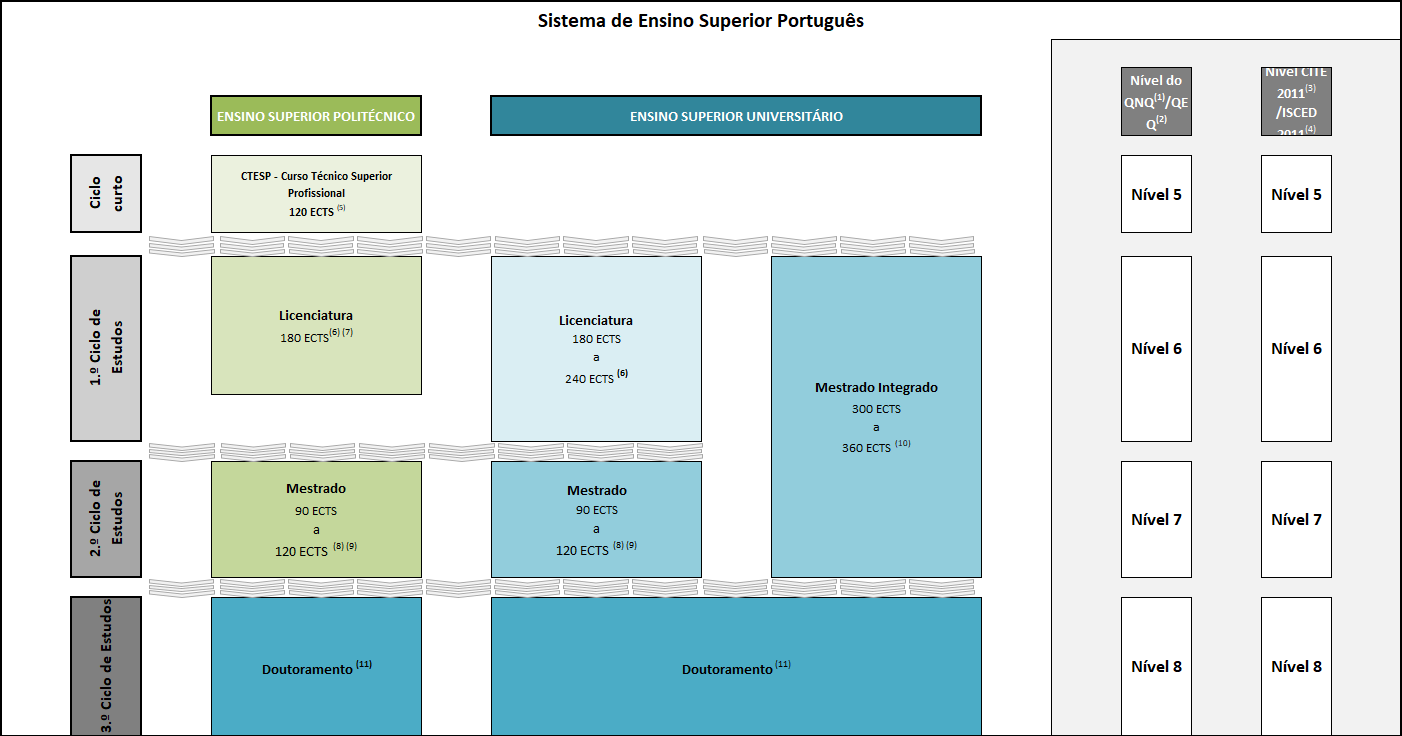
It is a non-degree-granting higher education study cycle, with 120 ECTS credits and a duration of two years, the successful completion of which leads to the awarding of a higher professional technician diploma.
Structure
CTeSP integrates:
- General and scientific training subjects;
- Technical training subjects;
- Work-based training. In total, considering the credits for the general and scientific training components and the technical training component, the former corresponds to approximately 30% and the latter to 70%.
70% of the class hours for technical training subjects are dedicated to practical, laboratory, or workshop application, depending on the type of profession the course prepares students for.
The work-based learning component is carried out through an internship, lasting at least one semester, which can be spread throughout the course.
Bribes
Information regarding tuition fees can be found here.
Scholarship
Information about scholarships and other support for higher education can be found here.
Access
Information regarding access and admission to this study program can be found here.
Job openings
The number of places available is determined annually by each institution, within the limits defined in the course registration.
There is a priority for filling these vacancies:
Up to 4% (and a minimum of 2 places): For students with disabilities. These students are given priority over the following.
Up to 50%: For students who complete vocational training courses at secondary level or equivalent in schools and other entities networked with the higher education institution.
CTeSP abroad
Higher education institutions may partner with other foreign higher education institutions to offer courses. However, this practice is contingent upon prior registration with IES, IP.
Creation of higher professional technical courses
The commencement of a higher professional technical course requires prior registration with IES, IP.