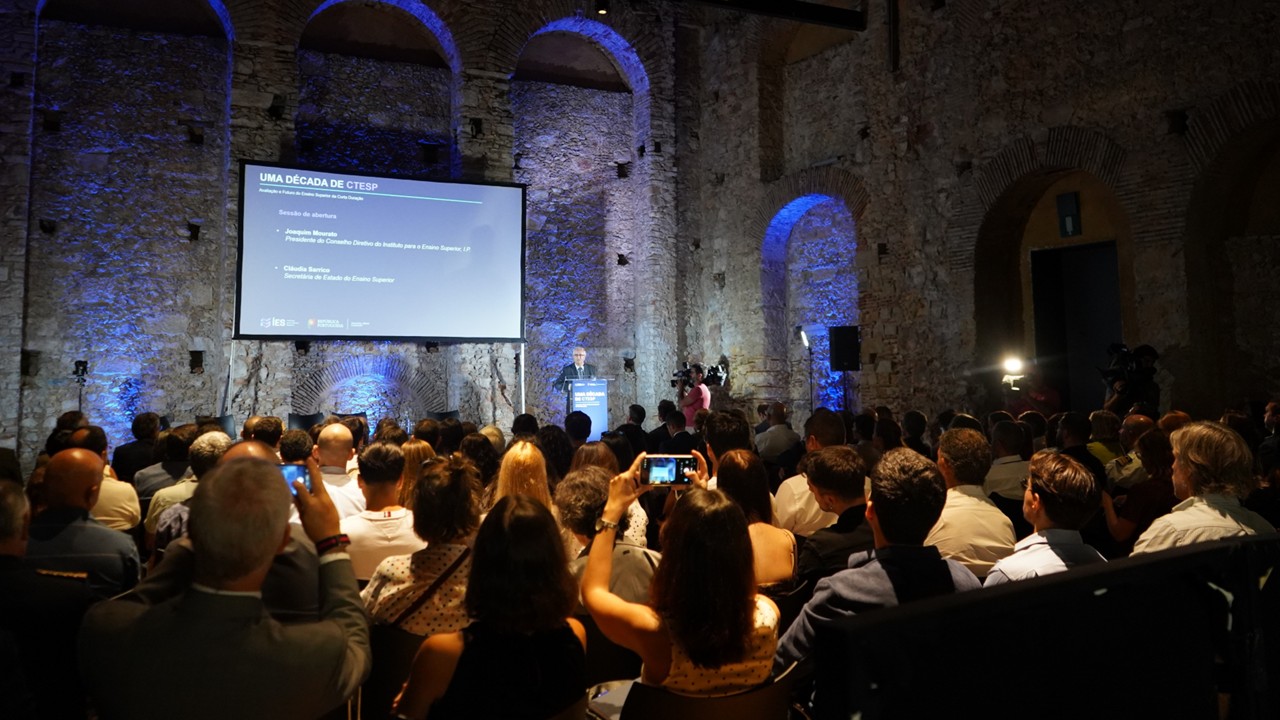
The Institute for Higher Education, IP (IES, IP) and the Ministry of Education, Science and Innovation (MECI) celebrated, on September 7th, at the Thalia Theatre in Lisbon, the 10th anniversary of the Higher Professional Technical Courses (CTeSP). The meeting was marked by the presentation of the commemorative study of the first decade of this offering and by strategic discussions with partners and regions on future priorities.
Joaquim Mourato, President of the Board of Directors of IES, IP, and Cláudia Sarrico, Secretary of State for Higher Education, opened the session, emphasizing the strategic role that CTeSP courses have played since their creation in 2014, as well as the importance of evaluating and critically reflecting on the impact of this offering over the last decade.
Presented by the Center for Research on Higher Education Policies (CIPES), the study "CTeSP: Evaluation of a Decade of Higher Professional Technical Courses" outlines the profile of students and the academic and professional impacts of the program. The study also points to challenges to be consolidated and recommendations for the future.
The conference featured simultaneous roundtables from five regional groups — North, Center, Lisbon and Tagus Valley, Alentejo and Algarve together with Madeira —, moderated by the Vice-Presidents of the respective CCDRs for the area of Education.
The sessions brought together educational institutions, students, graduates, employers, local authorities, and A3ES to analyze the socioeconomic impact of CTeSP (Professional Higher Technical Courses) at the local level.
At the closing of the initiative, Fernando Alexandre, Minister of Education, Science and Innovation, highlighted the recent organizational reforms, particularly the creation of the CCDR vice-presidencies with responsibilities in the area of Education, considered essential to ensure close regional coordination with the Ministry, the vocational education network, and the CTeSP (Professional Higher Technical Courses) program. He also reiterated the importance of diversifying pathways so that students have access to trajectories tailored to their profiles, reinforcing the need to link training and qualifications with national and regional development strategies.
Watch the recording of the session.
Access the event photos.
Please refer to the Final Report.
" CTeSP: Evaluation of a Decade of Higher Professional Technical Courses ""
Published in September 21, 2026 | Updated on September 21, 2026